Ten functional examples — shoe storage, coat hooks, a mirror, a runner and a basket — to make a narrow UK hallway work harder. Measure your space and check the listed dimensions before choosing.
A hallway is usually the narrowest room in a UK home and the one that has to do the most: it is where shoes, coats, keys and post all land the moment you walk in. In terraced houses and flats especially, every centimetre counts, so the goal is storage that works without blocking the walkway. This guide gathers ten functional examples that make a narrow hallway work harder, with UK sizes to check against your own space and price ranges to plan around.
Compare the current price, available variant and delivery at the retailer before planning the total. Historical guide prices are not guaranteed purchase prices.
The product examples below are selected from UK retailers, with prices in pounds sterling. If you shop from another country, check delivery availability with the retailer.
01
Shoes first
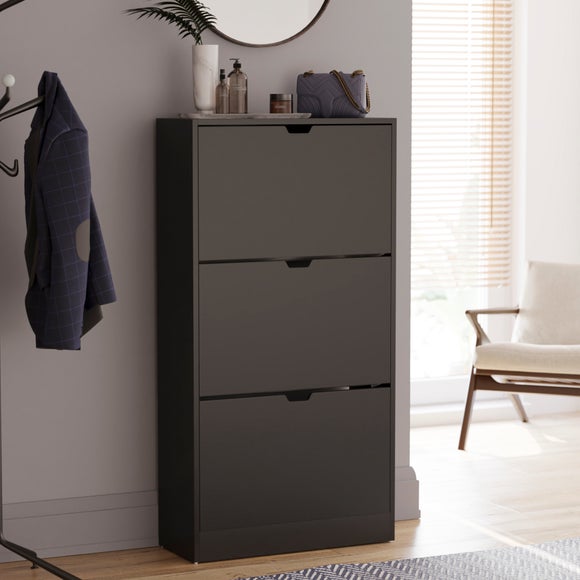
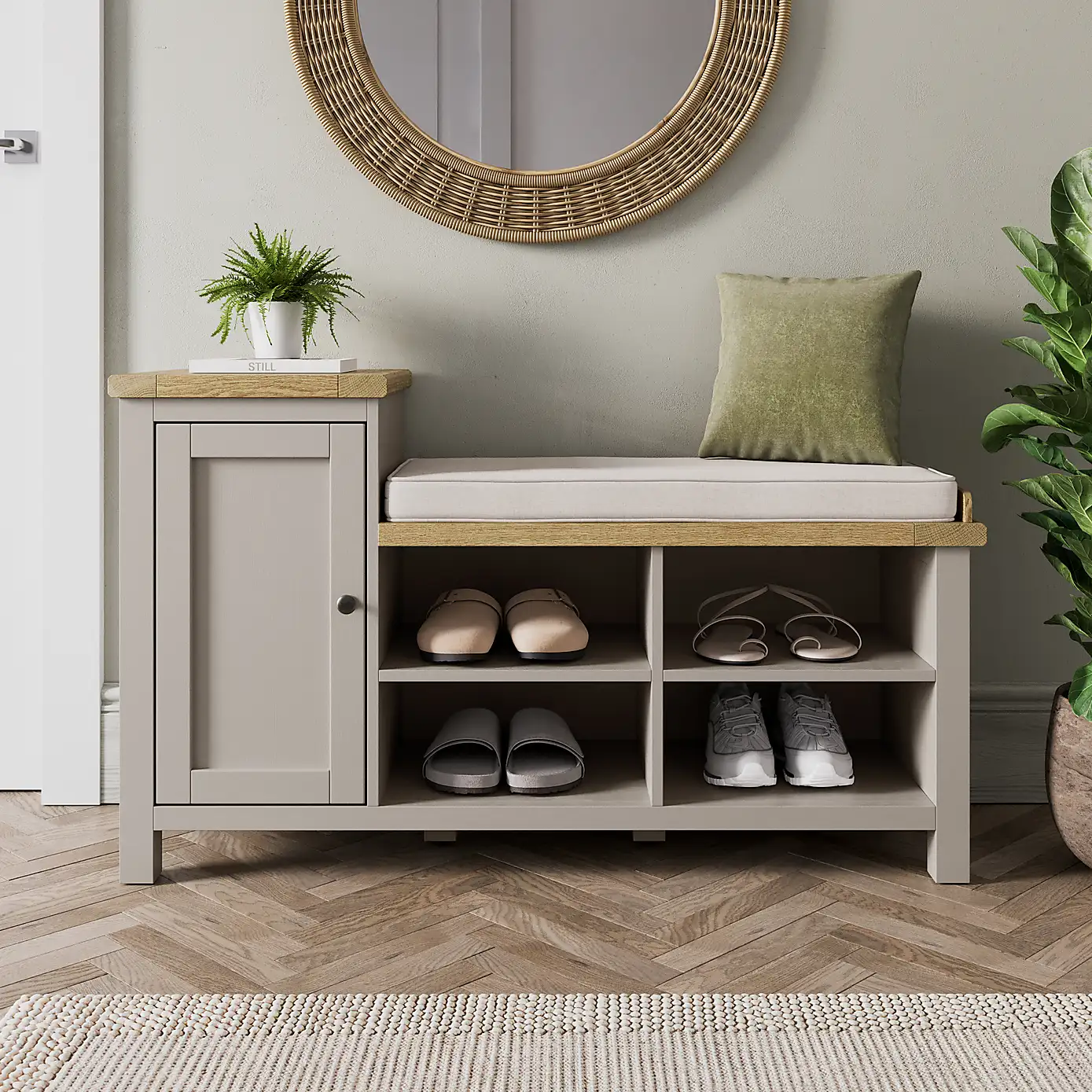
A slim shoe storage cabinet
A shoe cabinet with tilt-out drawers is the single most useful hallway piece because it holds several pairs in a footprint only 25-30cm deep — shallow enough to leave the walkway clear. Measure your hallway width first and leave at least 70-80cm of clear passage. Popular slim models sit in the £40-£90 range.
Ventilation is worth checking on a closed cabinet, since wet or muddy shoes stored without airflow can develop a damp smell faster than an open shoe rack would. Slatted or louvred doors, rather than solid ones, let air circulate while still keeping the shoes out of sight.
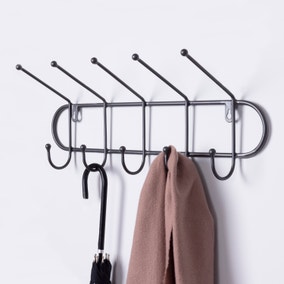
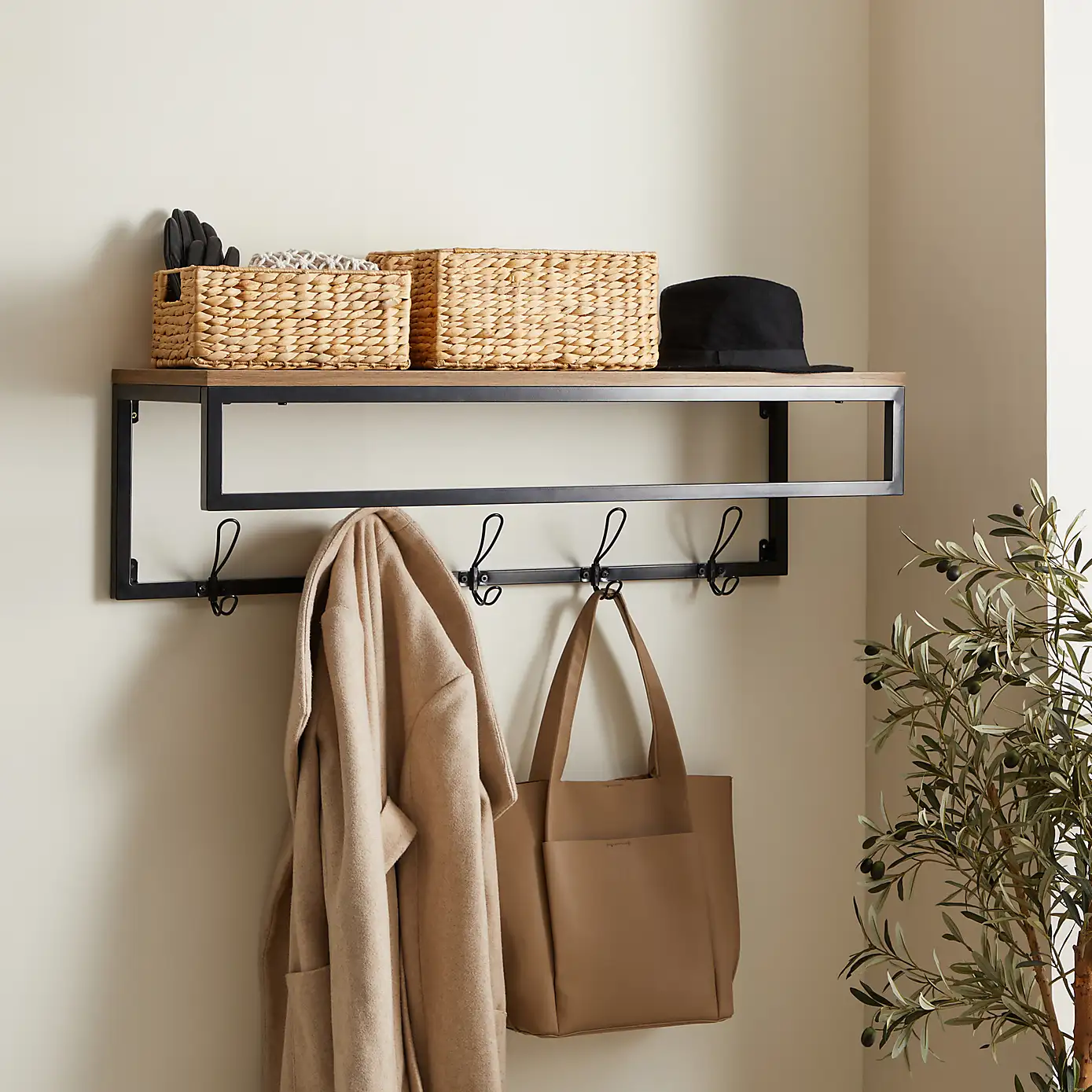
Keeping coats off the floor is what makes a narrow hallway feel wider. A wall-mounted rail or a row of hooks uses vertical space instead of floor space; fixing it at around 170cm suits most adults, with a lower row for children. From about £10-£35 depending on length and finish.
A row of individual hooks, rather than a single rail with one long bar, is worth choosing if more than one or two people use the hallway regularly — it stops coats bunching into a single pile at one end, the most common complaint with rail-style racks in a busy household.
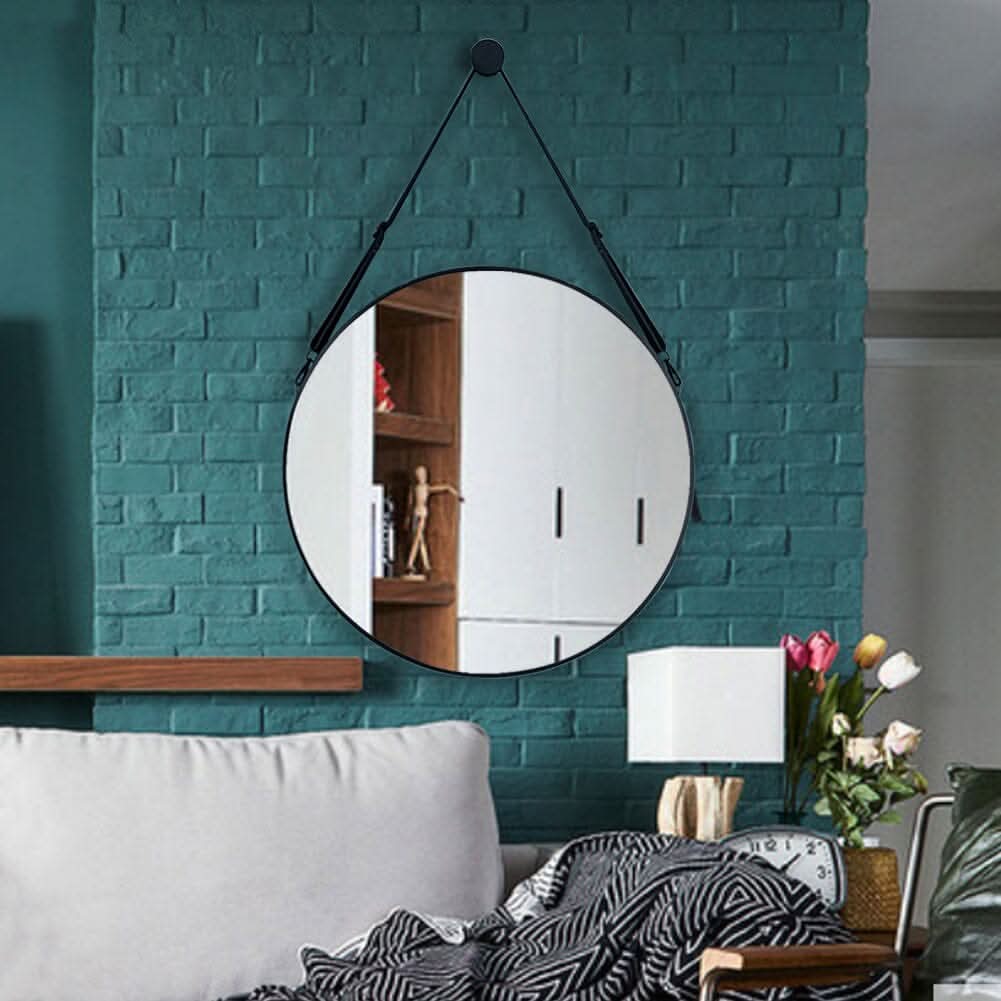
A mirror is the classic narrow-hallway trick: it bounces light down a dim corridor and makes the space read as wider. A slim full-length or a round wall mirror both work; lean full-length only where it cannot be knocked. Typically £20-£70.
A round or oval mirror gives a different visual shape. Check its actual depth, projection and mounting instructions; shape alone does not establish safety in a busy hallway.
Primary example
Retro Round Hanging Mirror with Adjustable Leather Strap
A low-pile runner defines the walkway, while a basket gives smaller items a place to land. Compare each product’s current price separately and measure the runner before ordering; the selected runner is not within a £15–£40 budget.
Buying the runner slightly shorter than the full hallway length, rather than edge-to-edge, is a common trick worth knowing: it leaves a border of visible flooring at each end, which reads as a deliberate design choice rather than a rug that simply ran out before reaching the wall.
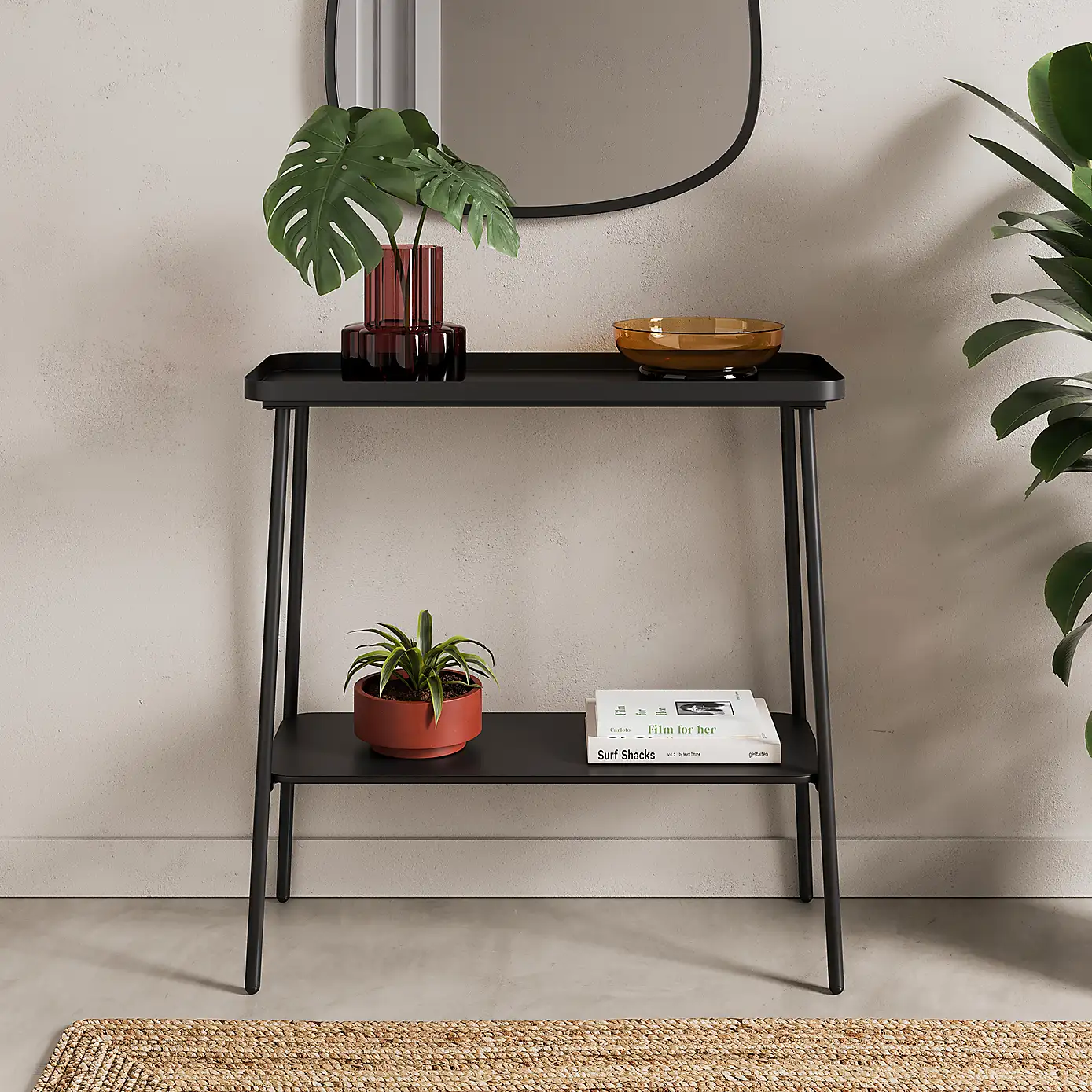
The one measurement that decides everything is clear passage width. Measure the hallway at its narrowest point, subtract the depth of any furniture you are considering, and make sure at least 70-80cm of walking space remains. Favour shallow, wall-mounted or wall-hugging pieces over anything that projects into the walkway, and keep to one or two taller items so the corridor does not feel boxed in. In older UK homes with an “under-stairs” nook, that recess is often the best place to put the shoe cabinet. These are guidelines to check against your own layout, not fixed rules.
Priority order if you can’t do all five at once
The shoe cabinet and the coat hooks solve the two problems that cause the most day-to-day clutter, so they are worth tackling first if budget is tight. The mirror, runner and basket are the finishing layer — they make the hallway look considered once the storage problem is already solved, but a hallway with just the first two pieces is already meaningfully tidier than one with none.
Materials for a high-traffic space
A hallway sees more daily wear than almost any other room — muddy shoes, wet umbrellas, a bike leaned against the wall on the way in. Iron or powder-coated metal hooks hold up to constant use better than a lightweight wood-effect rail, and a low-pile runner in a synthetic or wool-blend fibre wears better underfoot than a high-pile or natural-fibre rug, which flattens and marks faster in a walkway than anywhere else in the home.
Chosen together — shallow storage, vertical hooks, a mirror for light and a runner underfoot — these pieces let a narrow hallway hold everything it needs to without ever blocking the way through.
A FEW LAST QUESTIONS
Frequently Asked Questions
How do I know if a piece will fit my hallway?
Measure the hallway at its narrowest point, subtract the depth of any furniture you are considering, and make sure at least 70-80cm of walking space remains.
Should I choose wall-mounted or freestanding pieces?
Favour shallow, wall-mounted or wall-hugging pieces over anything that projects into the walkway — that is what keeps a narrow hallway usable.
How many taller pieces should I include?
Keep to one or two taller items so the corridor does not feel boxed in — the rest of the guide leans on shallow, low-profile pieces.
Where should shoe storage go in an older house?
In older UK homes with an “under-stairs” nook, that recess is often the best place to put the shoe cabinet.
Do I need to buy all five pieces at once?
No — the shoe cabinet and coat hooks solve the two biggest everyday clutter problems, so they are worth prioritising first if budget is tight. The mirror, runner and basket are the finishing layer, worth adding once the storage problem is already solved.
Larkholm is reader-supported. Some links on this page are affiliate links; if you buy through them we may earn a commission at no extra cost to you. See our Affiliate Disclosure.
THE LAST WORD
Keep what works. Choose what solves the next problem.
A considered room is built through useful decisions, one detail at a time.